
You turned on autopay years ago. Every month, your card says the payment was made on time. Then you open a statement and find an interest charge.
Nothing broke. Autopay did exactly what you told it to do. The problem is that you may have told it to pay only the minimum.
Autopay has two jobs: protect your due date and decide how much debt stays on the card. For someone who already pays in full, one setting does both. The expensive default handles only the first.
The three settings do three different jobs
Major issuers such as Capital One and Chase show three common autopay amounts:
| Setting | What it does | What it does not do |
|---|---|---|
| Minimum due | Pays the least required to keep the account current, assuming the payment clears | Does not pay off the statement or stop interest on the unpaid balance |
| Fixed amount | Pays the same amount each month | Does not adjust to your balance and may fall below the required minimum |
| Statement balance | Pays the amount on your last monthly statement | Does not include newer purchases made after that statement closed |
The key difference is the statement balance. If your card offers a purchase grace period and you are not carrying a balance, paying that amount in full by the due date can prevent interest on new purchases. The Consumer Financial Protection Bureau explains the rule: paying only part of the statement can remove that protection.
That is why “paid on time” and “paid no interest” are not the same result.
The minimum is a safety net, not a payoff plan
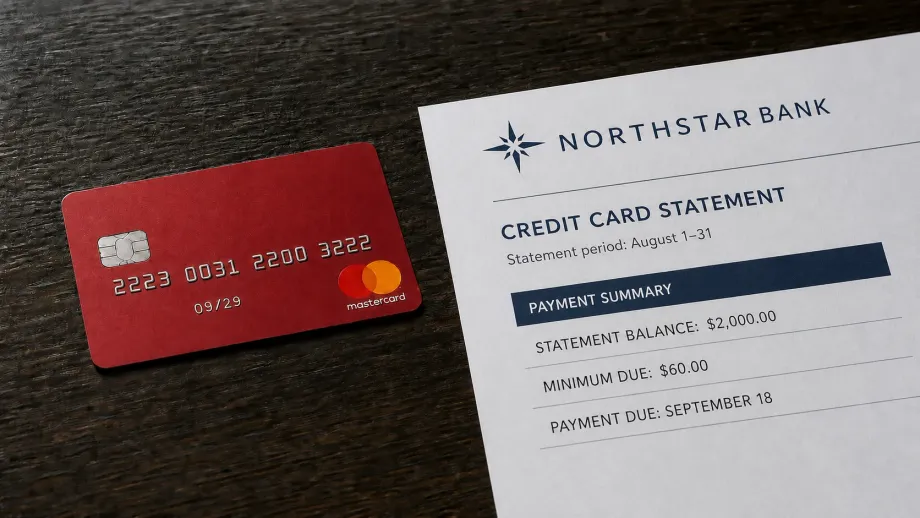
Say your statement balance is $2,000 and your purchase APR is 24%. A simple monthly estimate puts the interest near $40. If the minimum payment is $60, only about $20 reduces the balance at first. New purchases can erase even that progress.
Your real numbers will differ because issuers often calculate interest daily. You do not need to rebuild their math. Open your statement and find the minimum-payment warning. Federal rules generally require it to show how long minimum-only payments could take and how much they could cost.
That box is the fastest way to see what your current autopay setting is buying you.
Run this five-minute autopay check
Open one card and check three things:
- Autopay amount: minimum, fixed, or statement balance.
- Interest charged: look at the latest statement, not only the app’s green payment status.
- Next scheduled debit: confirm the amount, date, and bank account before changing anything.
Then choose the path that fits:
- You normally pay the card in full: choose statement balance, if your card offers it and your checking account can cover the debit. This is the low-maintenance setting built to preserve a normal purchase grace period.
- You carry a balance: keep minimum autopay as protection against a missed due date, then add a separate amount you can sustain after payday. A fixed payment works only when it comes from a real payoff plan and stays above each month’s required minimum.
- Your cash flow changes month to month: use minimum autopay as the floor, turn on a payment alert, and make extra payments when income arrives. Do not automate a full-statement debit that could empty the account or bounce.
Changing the setting does not erase interest already charged. If you lost your grace period, your agreement may require one or more full, on-time payments before it returns. Cash advances and some promotional balances can follow different rules too.
Check the amount, not just the switch
Autopay is still useful. It can protect you from forgetting a due date. But the switch itself does not decide whether your card is cheap or expensive. The amount does.
Want an easier way to stay ahead of your card payments? NEKO helps you see your money’s future by bringing credit cards, upcoming bills, and income into one clear calendar. Add a card, plan its expected payment from the statement balance or a fixed amount, and see how that debit changes your projected cash flow before it lands. Instead of hoping autopay fits, you can plan around it and know what’s safe to spend in the meantime.
Open your highest-balance card first. If the setting says “minimum,” decide whether it is your emergency floor or your accidental plan. Those are very different things.
Sources: CFPB guidance on credit-card grace periods, CFPB guidance on daily interest, and Regulation Z minimum-payment disclosures. The dollar example is simplified and illustrative; use your statement and card agreement for your actual terms. This article is general financial education, not personalized advice.